Medical Equipment Donation
Medical Equipment Donation: Complete Guide for Individuals & Organizations Topic: Medical Equipment Donation Introduction Donating medical equipment is one of the most impactful ways individuals, hospitals, and businesses can support healthcare access in underserved communities. Whether it’s a spare patient monitor sitting unused in a clinic storeroom or a bulk purchase intended for a rural health camp, equipment donations can extend the life of essential devices while helping community health workers deliver better care. But responsible donation involves more than simply handing over old devices — it requires attention to equipment condition, calibration, documentation, and the genuine needs of the receiving organization. This guide walks through what medical equipment donation involves, who it helps, and how to approach the process thoughtfully so that your contribution creates real value rather than becoming a burden for the recipient. What Is It? Medical equipment donation is the process of transferring diagnostic, monitoring, or treatment devices — such as patient monitors, blood pressure machines, or pulse oximeters — from an individual, hospital, or business to a healthcare provider, clinic, or nonprofit that can put the equipment to active use. Donations can be new, refurbished, or gently used, and may be organized informally between two parties or coordinated through an established healthcare support program. Why Does It Matter? Many community clinics and rural health centers operate with limited budgets and cannot always purchase the diagnostic tools they need. A well-chosen equipment donation can directly expand what a clinic is able to screen for, monitor, or treat. At the same time, thoughtful donation practices reduce equipment waste, extend the useful life of functioning devices, and help healthcare businesses and individuals put surplus inventory to meaningful use instead of letting it sit idle or be discarded. Who Can Benefit? Community clinics, rural health centers, healthcare NGOs, school health programs, disaster relief organizations, and outreach camps are typical beneficiaries of equipment donations. Businesses with CSR healthcare initiatives, hospitals upgrading their inventory, and individuals who have leftover home-care devices can all serve as donors. What Products Are Useful? Common equipment categories suited for donation include patient monitors, digital blood pressure monitors, pulse oximeters, thermometers, glucometers, weighing scales, and basic examination tools. The right choice depends heavily on what the recipient facility has requested and is equipped to maintain. How to Plan/Donate Responsibly Start by contacting the intended recipient before sourcing or shipping anything — ask what they actually need, what condition standards they require, and whether they have the technical capacity to use and maintain the equipment. Confirm the devices are in working order, ideally tested and calibrated, and gather any available documentation such as user manuals, calibration certificates, or maintenance records. Package equipment securely, label contents clearly, and keep a written record of what was donated, to whom, and when. Quality & Safety Considerations Equipment condition matters as much as intent. Devices that are broken, missing components, or so outdated that spare parts and support are unavailable often create more work for a recipient than value. Before donating, check that batteries, cables, and cuffs are intact, that any equipment requiring calibration has been checked, and that expired components (such as sensor tips or single-use attachments) are replaced or excluded. Frequently Asked Questions Q: Can I donate used medical equipment? A: Yes, in most cases, provided the equipment is functional, clean, and meets the recipient organization’s acceptance criteria. Always confirm with the recipient first, since some organizations only accept equipment above a certain condition standard. Q: Do I need documentation to donate equipment? A: It’s good practice to provide any manuals, calibration records, or proof of working condition you have, and to keep a donation record for your own files, particularly if the donation is tied to a CSR program. Q: How do I find an organization that needs equipment? A: Reach out directly to local clinics, healthcare NGOs, or community health programs to ask about their current equipment needs before donating. SkyMedIdent Product Recommendations For this topic, commonly relevant SkyMedIdent product categories include patient monitors, BP monitors, and pulse oximeters. Availability and specifications should be confirmed directly, and recipient needs should always guide the final selection. → Explore Medical Equipment Disclaimer This article is intended for general informational and educational purposes only and does not constitute medical, legal, or tax advice. Regulations governing the donation of medical equipment, including safety standards, biomedical waste rules, import/export requirements, and CSR or tax provisions, vary by state and country and change over time. Before donating, receiving, or facilitating a donation of medical equipment, please verify current regulatory requirements with a qualified professional or the relevant authority, and consult the recipient organization’s own equipment-acceptance policy. SkyMedIdent provides this information as a resource and does not guarantee its completeness or applicability to your specific situation. 2. How to Donate Hospital Equipment Responsibly Topic: Hospital Equipment Donation Introduction Hospitals periodically upgrade or replace equipment such as beds, examination tables, and monitoring devices, leaving functional units available for donation. When directed thoughtfully, this equipment can significantly benefit smaller clinics, rural health centers, or community programs that would otherwise be unable to afford it. However, hospital-grade equipment often comes with specific maintenance, calibration, and safety requirements that differ from smaller consumer devices, making responsible handling especially important. This article outlines what to consider when donating hospital equipment so it reaches a recipient equipped to use it safely and effectively. What Is It? Hospital equipment donation refers to transferring larger or more technical medical devices — such as hospital beds, examination tables, or multi-parameter monitors — from a hospital or healthcare business to another facility with a genuine need, typically a smaller clinic, rural center, or nonprofit health program. Why Does It Matter? Hospital-grade equipment is often expensive and technically sophisticated, meaning smaller facilities may never be able to acquire it through purchase alone. Responsible donation allows this equipment to continue delivering clinical value elsewhere instead of being scrapped, while also supporting hospitals’ own sustainability and space-management goals during upgrades. Who Can Benefit? Rural and community
Donate Now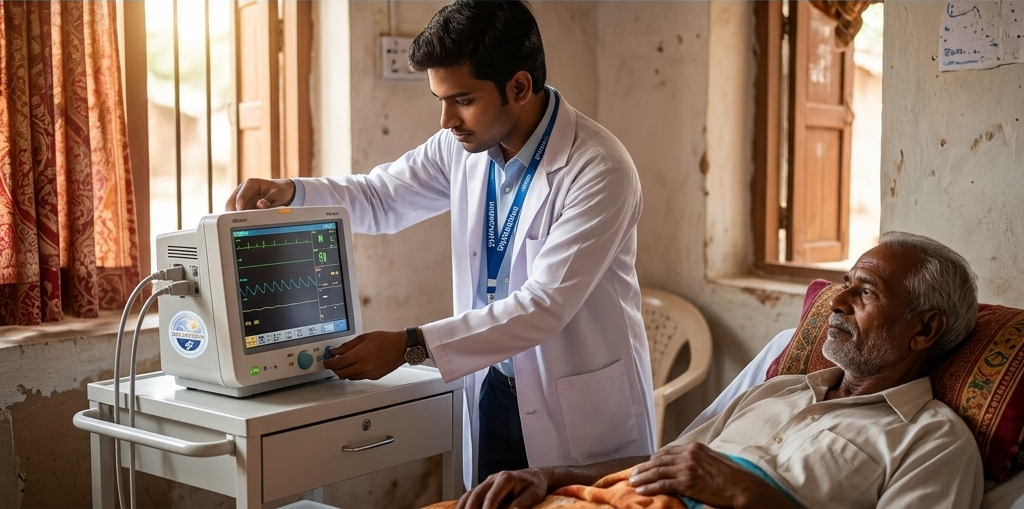
Campaign Story
Medical Equipment Donation: Complete Guide for Individuals & Organizations
Topic: Medical Equipment Donation
Introduction
Donating medical equipment is one of the most impactful ways individuals, hospitals, and businesses can support healthcare access in underserved communities. Whether it’s a spare patient monitor sitting unused in a clinic storeroom or a bulk purchase intended for a rural health camp, equipment donations can extend the life of essential devices while helping community health workers deliver better care. But responsible donation involves more than simply handing over old devices — it requires attention to equipment condition, calibration, documentation, and the genuine needs of the receiving organization. This guide walks through what medical equipment donation involves, who it helps, and how to approach the process thoughtfully so that your contribution creates real value rather than becoming a burden for the recipient.
What Is It?
Medical equipment donation is the process of transferring diagnostic, monitoring, or treatment devices — such as patient monitors, blood pressure machines, or pulse oximeters — from an individual, hospital, or business to a healthcare provider, clinic, or nonprofit that can put the equipment to active use. Donations can be new, refurbished, or gently used, and may be organized informally between two parties or coordinated through an established healthcare support program.
Why Does It Matter?
Many community clinics and rural health centers operate with limited budgets and cannot always purchase the diagnostic tools they need. A well-chosen equipment donation can directly expand what a clinic is able to screen for, monitor, or treat. At the same time, thoughtful donation practices reduce equipment waste, extend the useful life of functioning devices, and help healthcare businesses and individuals put surplus inventory to meaningful use instead of letting it sit idle or be discarded.
Who Can Benefit?
Community clinics, rural health centers, healthcare NGOs, school health programs, disaster relief organizations, and outreach camps are typical beneficiaries of equipment donations. Businesses with CSR healthcare initiatives, hospitals upgrading their inventory, and individuals who have leftover home-care devices can all serve as donors.
What Products Are Useful?
Common equipment categories suited for donation include patient monitors, digital blood pressure monitors, pulse oximeters, thermometers, glucometers, weighing scales, and basic examination tools. The right choice depends heavily on what the recipient facility has requested and is equipped to maintain.
How to Plan/Donate Responsibly
Start by contacting the intended recipient before sourcing or shipping anything — ask what they actually need, what condition standards they require, and whether they have the technical capacity to use and maintain the equipment. Confirm the devices are in working order, ideally tested and calibrated, and gather any available documentation such as user manuals, calibration certificates, or maintenance records. Package equipment securely, label contents clearly, and keep a written record of what was donated, to whom, and when.
Quality & Safety Considerations
Equipment condition matters as much as intent. Devices that are broken, missing components, or so outdated that spare parts and support are unavailable often create more work for a recipient than value. Before donating, check that batteries, cables, and cuffs are intact, that any equipment requiring calibration has been checked, and that expired components (such as sensor tips or single-use attachments) are replaced or excluded.
Frequently Asked Questions
Q: Can I donate used medical equipment?
A: Yes, in most cases, provided the equipment is functional, clean, and meets the recipient organization’s acceptance criteria. Always confirm with the recipient first, since some organizations only accept equipment above a certain condition standard.
Q: Do I need documentation to donate equipment?
A: It’s good practice to provide any manuals, calibration records, or proof of working condition you have, and to keep a donation record for your own files, particularly if the donation is tied to a CSR program.
Q: How do I find an organization that needs equipment?
A: Reach out directly to local clinics, healthcare NGOs, or community health programs to ask about their current equipment needs before donating.
SkyMedIdent Product Recommendations
For this topic, commonly relevant SkyMedIdent product categories include patient monitors, BP monitors, and pulse oximeters. Availability and specifications should be confirmed directly, and recipient needs should always guide the final selection.
→ Explore Medical Equipment
Disclaimer
This article is intended for general informational and educational purposes only and does not constitute medical, legal, or tax advice. Regulations governing the donation of medical equipment, including safety standards, biomedical waste rules, import/export requirements, and CSR or tax provisions, vary by state and country and change over time. Before donating, receiving, or facilitating a donation of medical equipment, please verify current regulatory requirements with a qualified professional or the relevant authority, and consult the recipient organization’s own equipment-acceptance policy. SkyMedIdent provides this information as a resource and does not guarantee its completeness or applicability to your specific situation.
2. How to Donate Hospital Equipment Responsibly
Topic: Hospital Equipment Donation
Introduction
Hospitals periodically upgrade or replace equipment such as beds, examination tables, and monitoring devices, leaving functional units available for donation. When directed thoughtfully, this equipment can significantly benefit smaller clinics, rural health centers, or community programs that would otherwise be unable to afford it. However, hospital-grade equipment often comes with specific maintenance, calibration, and safety requirements that differ from smaller consumer devices, making responsible handling especially important. This article outlines what to consider when donating hospital equipment so it reaches a recipient equipped to use it safely and effectively.
What Is It?
Hospital equipment donation refers to transferring larger or more technical medical devices — such as hospital beds, examination tables, or multi-parameter monitors — from a hospital or healthcare business to another facility with a genuine need, typically a smaller clinic, rural center, or nonprofit health program.
Why Does It Matter?
Hospital-grade equipment is often expensive and technically sophisticated, meaning smaller facilities may never be able to acquire it through purchase alone. Responsible donation allows this equipment to continue delivering clinical value elsewhere instead of being scrapped, while also supporting hospitals’ own sustainability and space-management goals during upgrades.
Who Can Benefit?
Rural and community hospitals, primary health centers, NGO-run clinics, and healthcare training institutions are common recipients, particularly ones that lack capital budgets for larger equipment purchases.
What Products Are Useful?
Typical donated hospital equipment includes hospital beds, examination tables, and multi-parameter or vital-signs monitors — items that require more planning around transport, installation, and technical support than smaller consumables.
How to Plan/Donate Responsibly
Confirm the recipient facility has the physical space, electrical infrastructure, and trained staff needed to operate the equipment. Arrange for a technical inspection before transfer where possible, and clarify who is responsible for transport, installation, and any servicing after delivery. Provide all available service history and user documentation, and agree on a simple handover record signed by both parties.
Quality & Safety Considerations
Hospital equipment should be functionally tested prior to donation, and any known faults disclosed clearly rather than left for the recipient to discover. Check that safety features such as bed rails, brakes, or alarm systems are intact, and confirm that any equipment requiring periodic calibration is within a safe usable window.
Frequently Asked Questions
Q: Who pays for transport of donated hospital equipment?
A: This varies by arrangement — some donors cover logistics, while others expect the recipient to arrange transport. Agree on this upfront to avoid confusion.
Q: Should hospital equipment be inspected before donation?
A: Yes, a basic functional check helps ensure the equipment is safe and usable, and helps you disclose any limitations honestly to the recipient.
Q: Can non-functional equipment still be donated for parts?
A: Some facilities do accept non-functional units for spare parts, but this should be explicitly agreed upon rather than assumed.
SkyMedIdent Product Recommendations
For this topic, commonly relevant SkyMedIdent product categories include hospital beds, examination tables, and monitors. Availability and specifications should be confirmed directly, and recipient needs should always guide the final selection.
→ View Hospital Equipment
Disclaimer
This article is intended for general informational and educational purposes only and does not constitute medical, legal, or tax advice. Regulations governing the donation of medical equipment, including safety standards, biomedical waste rules, import/export requirements, and CSR or tax provisions, vary by state and country and change over time. Before donating, receiving, or facilitating a donation of medical equipment, please verify current regulatory requirements with a qualified professional or the relevant authority, and consult the recipient organization’s own equipment-acceptance policy. SkyMedIdent provides this information as a resource and does not guarantee its completeness or applicability to your specific situation.
3. Essential Diagnostic Equipment for Healthcare Donations
Topic: Diagnostic Equipment
Introduction
Diagnostic tools are often the first line of care in community health settings — helping health workers screen for common conditions like hypertension, low oxygen saturation, or elevated blood sugar before a patient is referred further. Because these devices are relatively compact and easier to maintain than larger hospital equipment, they are frequently among the most requested items in healthcare donation programs. This guide covers the diagnostic devices most useful for donation and what to keep in mind when selecting and preparing them.
What Is It?
Diagnostic equipment donation involves providing devices used to measure or screen for health indicators — such as pulse oximeters, blood pressure monitors, and glucometers — to clinics, health camps, or outreach programs that use them for patient screening and monitoring.
Why Does It Matter?
Early screening often determines whether a patient receives timely care. Community health workers equipped with functioning diagnostic tools can identify conditions earlier, refer patients appropriately, and track basic health indicators over time — all of which are difficult without reliable equipment.
Who Can Benefit?
Community health workers, rural clinics, screening camps, school health programs, and mobile healthcare units rely heavily on portable diagnostic devices to carry out their work.
What Products Are Useful?
Pulse oximeters, digital blood pressure monitors, and glucometers (along with compatible test strips and lancets) are among the most consistently useful diagnostic donations, given how frequently they’re used in day-to-day screening.
How to Plan/Donate Responsibly
Check with the recipient which diagnostic tools they are already equipped to use, since consumables like test strips are device-specific and not interchangeable. Where possible, donate complete sets (device plus a reasonable supply of consumables) rather than a device alone, since a glucometer without strips has limited immediate use. Confirm devices are calibrated or within their expected accuracy window before handover.
Quality & Safety Considerations
Accuracy is critical for diagnostic tools — a miscalibrated blood pressure monitor or glucometer can lead to incorrect clinical decisions. Test devices against a known reference where feasible, check battery compartments for corrosion, and avoid donating consumables that are near or past their expiry date.
Frequently Asked Questions
Q: Can I donate a glucometer without test strips?
A: You can, but it’s far more useful to the recipient if paired with compatible strips and lancets, since these are consumable and device-specific.
Q: How do I know if a diagnostic device is still accurate?
A: Where possible, compare readings against a known reference device or have it checked by a biomedical technician before donating.
Q: Are refurbished diagnostic devices acceptable for donation?
A: Many organizations accept well-refurbished diagnostic equipment, but you should confirm the recipient’s specific acceptance policy first.
SkyMedIdent Product Recommendations
For this topic, commonly relevant SkyMedIdent product categories include pulse oximeters, BP monitors, and glucometers. Availability and specifications should be confirmed directly, and recipient needs should always guide the final selection.
→ Shop Diagnostic Equipment
Disclaimer
This article is intended for general informational and educational purposes only and does not constitute medical, legal, or tax advice. Regulations governing the donation of medical equipment, including safety standards, biomedical waste rules, import/export requirements, and CSR or tax provisions, vary by state and country and change over time. Before donating, receiving, or facilitating a donation of medical equipment, please verify current regulatory requirements with a qualified professional or the relevant authority, and consult the recipient organization’s own equipment-acceptance policy. SkyMedIdent provides this information as a resource and does not guarantee its completeness or applicability to your specific situation.
4. Emergency Medical Equipment That Can Support Community Healthcare
Topic: Emergency Equipment
Introduction
Emergencies don’t wait for resources to be in place — which is why community-level access to basic emergency equipment can make a measurable difference in outcomes before a patient reaches a hospital. From first-aid kits to stretchers and oxygen accessories, emergency equipment donations help bridge the critical gap between an incident and definitive care, particularly in areas with longer emergency response times. This article looks at which emergency supplies are most valuable to donate and how to approach the process responsibly.
What Is It?
Emergency medical equipment donation covers items used to stabilize or support patients in urgent situations, such as first-aid kits, stretchers, and oxygen-related accessories, typically directed toward community health points, schools, workplaces, or disaster-response organizations.
Why Does It Matter?
In many communities, the time between an emergency and professional medical care can be significant. Having basic stabilization equipment on hand at community centers, schools, or local health points can help bystanders and first responders provide interim support that improves a patient’s chances before further care is reached.
Who Can Benefit?
Schools, workplaces, community centers, disaster-relief organizations, and rural health points that serve as first points of contact during medical emergencies benefit most from these donations.
What Products Are Useful?
First-aid kits, stretchers, and oxygen accessories (such as masks or tubing compatible with available oxygen sources) are commonly donated items in this category, chosen based on the recipient’s role in emergency response.
How to Plan/Donate Responsibly
Confirm what emergency situations the recipient is most likely to encounter — a school’s needs differ from a disaster-relief organization’s — and tailor the donation accordingly. Check expiry dates on any consumable first-aid items before including them, and provide basic usage guidance or training materials where relevant, especially for less familiar equipment.
Quality & Safety Considerations
Emergency equipment must be reliable, since it’s often used under pressure with little time for troubleshooting. Inspect stretchers for structural integrity, verify that oxygen accessories are compatible with the recipient’s existing equipment, and never include first-aid consumables that are expired or improperly stored.
Frequently Asked Questions
Q: What should a basic community first-aid kit include?
A: A well-stocked kit typically includes wound dressings, antiseptics, bandages, gloves, and basic instruments — tailored to the setting it will be used in.
Q: Can I donate expired first-aid supplies?
A: No — expired consumables should not be included in donations, as they may not function safely or effectively when needed.
Q: Do recipients need training to use donated emergency equipment?
A: Some equipment benefits from basic orientation, so it’s worth checking whether the recipient organization has trained staff or would appreciate a short guide.
SkyMedIdent Product Recommendations
For this topic, commonly relevant SkyMedIdent product categories include first-aid kits, stretchers, and oxygen accessories. Availability and specifications should be confirmed directly, and recipient needs should always guide the final selection.
→ Explore Emergency Supplies
Disclaimer
This article is intended for general informational and educational purposes only and does not constitute medical, legal, or tax advice. Regulations governing the donation of medical equipment, including safety standards, biomedical waste rules, import/export requirements, and CSR or tax provisions, vary by state and country and change over time. Before donating, receiving, or facilitating a donation of medical equipment, please verify current regulatory requirements with a qualified professional or the relevant authority, and consult the recipient organization’s own equipment-acceptance policy. SkyMedIdent provides this information as a resource and does not guarantee its completeness or applicability to your specific situation.
5. Medical Equipment Donations for Rural Healthcare Centers
Topic: Rural Healthcare
Introduction
Rural healthcare centers frequently serve large populations with a fraction of the equipment available to urban hospitals, making thoughtful equipment donations especially valuable in these settings. Beyond simply providing devices, effective rural donations account for challenges like inconsistent power supply, limited technical support, and the practicalities of transport to remote locations. This guide explores how to approach medical equipment donations aimed at rural healthcare centers so the equipment remains usable long after it arrives.
What Is It?
This category covers medical equipment — such as blood pressure monitors, weighing scales, and examination equipment — donated specifically to healthcare centers serving rural or remote populations, where access to both funding and technical infrastructure tends to be limited.
Why Does It Matter?
Rural health centers often act as the only accessible point of care for surrounding communities, sometimes covering large geographic areas. Equipping them with functional, low-maintenance devices directly expands the range of care available locally and can reduce the need for patients to travel long distances for basic screening.
Who Can Benefit?
Primary health centers, rural clinics, mobile health units, and community health workers operating in remote areas are the primary beneficiaries of these donations.
What Products Are Useful?
Durable, low-maintenance items such as blood pressure monitors, weighing scales, and basic examination equipment tend to hold up well in rural settings where technical servicing may not be readily available.
How to Plan/Donate Responsibly
Ask about power availability at the recipient facility, since some devices require stable electricity or rechargeable batteries that may be difficult to maintain in areas with inconsistent supply. Favor equipment with simple operation and minimal need for specialized servicing, and consider including basic spare parts (such as extra cuffs or batteries) where practical.
Quality & Safety Considerations
Ruggedness matters more in rural settings, where technical support is less accessible. Choose devices known for durability, avoid highly specialized equipment the facility can’t service locally, and confirm that any battery-operated devices come with reasonably fresh batteries or clear charging instructions.
Frequently Asked Questions
Q: What equipment works best in areas with unreliable electricity?
A: Battery-operated or manual devices, such as manual blood pressure monitors and mechanical weighing scales, tend to be more practical where power supply is inconsistent.
Q: How do I know what a specific rural center actually needs?
A: Contact the center directly, or work through a healthcare support organization familiar with the region’s needs, before finalizing a donation.
Q: Should I include spare parts with rural equipment donations?
A: Where practical, yes — spare cuffs, batteries, or basic accessories can significantly extend the usable life of equipment in areas with limited technical support.
SkyMedIdent Product Recommendations
For this topic, commonly relevant SkyMedIdent product categories include BP monitors, weighing scales, and examination equipment. Availability and specifications should be confirmed directly, and recipient needs should always guide the final selection.
→ Support Healthcare Access
Disclaimer
This article is intended for general informational and educational purposes only and does not constitute medical, legal, or tax advice. Regulations governing the donation of medical equipment, including safety standards, biomedical waste rules, import/export requirements, and CSR or tax provisions, vary by state and country and change over time. Before donating, receiving, or facilitating a donation of medical equipment, please verify current regulatory requirements with a qualified professional or the relevant authority, and consult the recipient organization’s own equipment-acceptance policy. SkyMedIdent provides this information as a resource and does not guarantee its completeness or applicability to your specific situation.
6. Essential Equipment for Community Clinics
Topic: Community Clinics
Introduction
Community clinics are often the backbone of local healthcare, providing routine checkups, basic diagnostics, and preventive care to residents who might not otherwise have easy access to a hospital. Because these clinics typically operate on tight budgets, equipment donations can materially expand what services they’re able to offer. This article covers the kinds of equipment most useful to community clinics and how to think through a donation that genuinely fits their day-to-day needs.
What Is It?
Community clinic equipment donation refers to providing examination and diagnostic tools — such as examination tables and basic diagnostic devices — to small, local clinics that deliver routine and preventive healthcare services to their surrounding community.
Why Does It Matter?
Well-equipped community clinics can catch health issues earlier, reduce unnecessary hospital referrals, and provide more comprehensive care during a single visit. For many residents, the local clinic is the most accessible entry point into the healthcare system, so its capabilities directly shape the quality of care available nearby.
Who Can Benefit?
Small community clinics, primary care centers, and nonprofit health outposts serving local neighborhoods are the main beneficiaries of this type of donation.
What Products Are Useful?
Examination tables and basic diagnostic devices — such as stethoscopes, thermometers, and blood pressure monitors — form the core of what most community clinics rely on for everyday patient care.
How to Plan/Donate Responsibly
Speak with clinic staff about which services they currently offer and which they’d like to expand, since equipment needs will differ between a general checkup clinic and one focused on specific screenings. Confirm the clinic has adequate space for larger items like examination tables before including them in a donation, and coordinate a convenient delivery and setup time.
Quality & Safety Considerations
Examination equipment should be stable, clean, and free of structural damage, since it’s used directly with patients on a daily basis. Diagnostic tools should be checked for accuracy, and any padded or upholstered surfaces (such as examination table coverings) should be free of tears that could harbor contamination.
Frequently Asked Questions
Q: What’s the most commonly needed item for community clinics?
A: Basic diagnostic tools like blood pressure monitors and thermometers tend to see near-constant use across almost any community clinic setting.
Q: Can I donate furniture like examination tables?
A: Yes, provided the clinic has space for it and the table is structurally sound and hygienically maintainable.
Q: How often should clinic equipment be checked after donation?
A: Routine maintenance schedules vary by device, but most diagnostic tools benefit from periodic accuracy checks as recommended by their manufacturer.
SkyMedIdent Product Recommendations
For this topic, commonly relevant SkyMedIdent product categories include examination tables and diagnostic devices. Availability and specifications should be confirmed directly, and recipient needs should always guide the final selection.
→ Explore Clinic Supplies
Disclaimer
This article is intended for general informational and educational purposes only and does not constitute medical, legal, or tax advice. Regulations governing the donation of medical equipment, including safety standards, biomedical waste rules, import/export requirements, and CSR or tax provisions, vary by state and country and change over time. Before donating, receiving, or facilitating a donation of medical equipment, please verify current regulatory requirements with a qualified professional or the relevant authority, and consult the recipient organization’s own equipment-acceptance policy. SkyMedIdent provides this information as a resource and does not guarantee its completeness or applicability to your specific situation.
7. Is Donating Refurbished Medical Equipment a Good Idea?
Topic: Refurbished Equipment
Introduction
Refurbished medical equipment — devices that have been repaired, tested, and restored to working condition — offers a middle ground between costly new purchases and risky used donations. For donors looking to stretch their contribution further, and for recipients who need reliable equipment on a limited budget, refurbished devices can be a genuinely good option when sourced and vetted properly. This article examines when refurbished equipment makes sense for donation and what precautions to take.
What Is It?
Refurbished medical equipment refers to previously used devices that have gone through a process of cleaning, repair, and functional testing to restore them to a safe, working condition before being made available again, whether for purchase or donation.
Why Does It Matter?
Refurbished equipment can lower the cost barrier to accessing devices that would otherwise be out of reach for smaller clinics, while also reducing electronic and medical waste. When properly tested, it can perform comparably to new equipment at a fraction of the cost — making it an efficient way to stretch donation budgets further.
Who Can Benefit?
Budget-conscious clinics, nonprofit health programs, and donors looking to provide more equipment within a limited budget all stand to benefit from well-sourced refurbished devices.
What Products Are Useful?
Refurbished monitors and other refurbished diagnostic or monitoring equipment are commonly available through specialized suppliers and can be a practical donation category when properly certified.
How to Plan/Donate Responsibly
Only source refurbished equipment from reputable suppliers who provide some form of testing or warranty, and ask for documentation of the refurbishment process where available. Communicate clearly with the recipient that the equipment is refurbished (not new) so their expectations are set accurately, and check whether any warranty or support period transfers with the donation.
Quality & Safety Considerations
Because refurbished equipment has a prior service life, quality verification is especially important. Look for suppliers who test devices against manufacturer specifications, ask about the age and expected remaining lifespan of the unit, and avoid refurbished equipment with no accompanying testing documentation.
Frequently Asked Questions
Q: Is refurbished equipment as reliable as new equipment?
A: It can be, particularly when sourced from a reputable refurbisher who tests and certifies the equipment, though remaining lifespan may be shorter than a brand-new unit.
Q: Should recipients be told equipment is refurbished?
A: Yes — transparency about a device’s refurbished status helps the recipient set appropriate expectations and plan for eventual replacement.
Q: Does refurbished equipment come with a warranty?
A: This varies by supplier; ask specifically about warranty or support terms before finalizing a refurbished equipment donation.
SkyMedIdent Product Recommendations
For this topic, commonly relevant SkyMedIdent product categories include refurbished monitors and diagnostic equipment. Availability and specifications should be confirmed directly, and recipient needs should always guide the final selection.
→ Explore Refurbished Products
Disclaimer
This article is intended for general informational and educational purposes only and does not constitute medical, legal, or tax advice. Regulations governing the donation of medical equipment, including safety standards, biomedical waste rules, import/export requirements, and CSR or tax provisions, vary by state and country and change over time. Before donating, receiving, or facilitating a donation of medical equipment, please verify current regulatory requirements with a qualified professional or the relevant authority, and consult the recipient organization’s own equipment-acceptance policy. SkyMedIdent provides this information as a resource and does not guarantee its completeness or applicability to your specific situation.
8. How to Choose Medical Equipment for Donation
Topic: Equipment Selection
Introduction
Choosing the right equipment to donate is often more important than the size of the donation itself — a well-matched device can serve a clinic for years, while a mismatched one may sit unused. Thoughtful selection means considering the recipient’s actual needs, technical capacity, and existing equipment, rather than donating simply what’s available. This guide walks through a practical approach to selecting medical equipment for donation.
What Is It?
Equipment selection for donation is the process of identifying which specific devices to donate based on a recipient organization’s stated needs, existing capabilities, and the practical realities of their care setting — rather than donating based solely on what a donor happens to have available.
Why Does It Matter?
Equipment that doesn’t match a recipient’s needs, technical skill, or infrastructure often ends up unused, creating storage burdens rather than value. Careful selection ensures donated equipment is actually put to use, maximizing the real-world impact of the contribution.
Who Can Benefit?
Recipient organizations benefit directly through more usable donations, while donors benefit from knowing their contribution will have genuine impact rather than going to waste.
What Products Are Useful?
The most appropriate products vary by recipient, but common starting points include blood pressure monitors, thermometers, and other diagnostic devices that are broadly useful across most healthcare settings.
How to Plan/Donate Responsibly
Begin with a direct conversation with the recipient about their current equipment gaps rather than assuming what they need. Ask about their patient volume, the conditions they most frequently treat or screen for, and any equipment they already have that new donations should complement rather than duplicate. Where possible, prioritize equipment the recipient’s staff are already trained to use.
Quality & Safety Considerations
Selection should also account for long-term usability — choosing equipment with accessible consumables, available spare parts, and a reasonable expected lifespan given the recipient’s operating conditions, rather than devices that will become unusable once a single component fails.
Frequently Asked Questions
Q: Should I ask the recipient what they need before donating?
A: Yes, this is the single most effective step to ensure your donation has genuine impact rather than duplicating existing equipment or going unused.
Q: What if I have equipment but no specific recipient in mind?
A: Consider reaching out to healthcare support organizations who can help match your equipment with a facility that has an appropriate need.
Q: Is it better to donate one large item or several smaller items?
A: This depends entirely on the recipient’s stated needs — there’s no universal answer, which is why direct communication matters most.
SkyMedIdent Product Recommendations
For this topic, commonly relevant SkyMedIdent product categories include BP monitors, thermometers, and diagnostic devices. Availability and specifications should be confirmed directly, and recipient needs should always guide the final selection.
→ Get Product Guidance
Disclaimer
This article is intended for general informational and educational purposes only and does not constitute medical, legal, or tax advice. Regulations governing the donation of medical equipment, including safety standards, biomedical waste rules, import/export requirements, and CSR or tax provisions, vary by state and country and change over time. Before donating, receiving, or facilitating a donation of medical equipment, please verify current regulatory requirements with a qualified professional or the relevant authority, and consult the recipient organization’s own equipment-acceptance policy. SkyMedIdent provides this information as a resource and does not guarantee its completeness or applicability to your specific situation.
9. Preparing Medical Equipment Before Donation
Topic: Equipment Maintenance
Introduction
The work of donating equipment doesn’t end at deciding what to give — how equipment is prepared before it leaves your hands can significantly affect how usable it is once it arrives. Proper cleaning, functional checks, and basic maintenance help ensure that donated devices are ready for immediate use rather than requiring repairs the recipient may not be equipped to handle. This article covers the key steps to prepare medical equipment responsibly before donation.
What Is It?
Preparing medical equipment before donation involves cleaning, functional testing, and basic maintenance performed on a device prior to handover, so that it arrives at the recipient organization in a safe, usable condition.
Why Does It Matter?
Recipient organizations, especially smaller clinics, often lack the time, tools, or technical staff to repair or deep-clean equipment before putting it into use. Equipment that arrives ready to use gets integrated into patient care far faster than equipment that requires troubleshooting first.
Who Can Benefit?
Recipient clinics benefit from reduced setup burden, while donors benefit from knowing their contribution is genuinely ready to help rather than adding hidden work for the recipient.
What Products Are Useful?
Preparation typically applies across most donated categories, but is especially relevant for items with reusable components, such as monitors, cuffs, and other equipment that comes into direct or indirect patient contact.
How to Plan/Donate Responsibly
Clean and disinfect equipment according to manufacturer guidelines before packing it, and test each device to confirm it powers on and functions as expected. Replace or note any missing accessories, such as cables or cuffs, and include any relevant manuals or quick-reference guides you have on hand.
Quality & Safety Considerations
Pay particular attention to components that contact patients directly, ensuring they’re properly disinfected and free of damage. For equipment with calibration requirements, check or note the last known calibration date so the recipient can plan accordingly.
Frequently Asked Questions
Q: How should I clean equipment before donating it?
A: Follow the manufacturer’s recommended cleaning and disinfection procedures for that specific device type, using appropriate materials to avoid damaging sensitive components.
Q: What if I don’t have the original manual for a device?
A: Note the make and model clearly so the recipient can look up documentation themselves, and mention any known quirks or operating instructions you’re aware of.
Q: Should I test equipment even if it was working when last used?
A: Yes — a functional test just before donation helps confirm the device is still in good working order and gives the recipient confidence in what they’re receiving.
SkyMedIdent Product Recommendations
For this topic, commonly relevant SkyMedIdent product categories include cleaning supplies and equipment accessories. Availability and specifications should be confirmed directly, and recipient needs should always guide the final selection.
→ Explore Maintenance Supplies
Disclaimer
This article is intended for general informational and educational purposes only and does not constitute medical, legal, or tax advice. Regulations governing the donation of medical equipment, including safety standards, biomedical waste rules, import/export requirements, and CSR or tax provisions, vary by state and country and change over time. Before donating, receiving, or facilitating a donation of medical equipment, please verify current regulatory requirements with a qualified professional or the relevant authority, and consult the recipient organization’s own equipment-acceptance policy. SkyMedIdent provides this information as a resource and does not guarantee its completeness or applicability to your specific situation.
10. Medical Equipment Donation Checklist
Topic: Equipment Checklist
Introduction
With so many factors to consider — recipient needs, equipment condition, documentation, and logistics — it helps to have a clear checklist to guide the donation process from start to finish. This article distills the key steps covered throughout this guide into a practical, easy-to-follow checklist for anyone preparing to donate medical equipment, whether it’s a single device or a larger organizational contribution.
What Is It?
A medical equipment donation checklist is a structured list of steps and considerations — covering recipient needs, equipment condition, documentation, and logistics — designed to help donors approach the donation process thoroughly and responsibly.
Why Does It Matter?
A checklist reduces the chance of overlooking an important step, such as confirming recipient needs or checking equipment condition, which can be the difference between a donation that gets used immediately and one that sits unused.
Who Can Benefit?
Both individual and organizational donors benefit from a structured approach, as do recipient organizations who receive better-prepared, better-matched donations as a result.
What Products Are Useful?
This checklist applies broadly across equipment categories, from small diagnostic devices to larger hospital equipment, and can be adapted to the scale of your specific donation.
How to Plan/Donate Responsibly
Before donating, confirm the recipient’s specific need and acceptance criteria, verify the equipment’s functional condition, clean and prepare it appropriately, gather available documentation, agree on transport and delivery logistics, and record the donation for your own files. Following these steps in order helps avoid gaps that could delay the equipment’s actual use.
Quality & Safety Considerations
Build a final quality check into your process — a last look to confirm the equipment is clean, functional, and complete before it leaves your possession, since this is the last opportunity to catch an issue before the recipient does.
Frequently Asked Questions
Q: Is a donation checklist necessary for a single item?
A: Even small donations benefit from a quick run-through of key steps like confirming need and checking condition, though the process can be much simpler than for larger donations.
Q: Should organizations keep formal donation records?
A: Yes, particularly for CSR-linked donations or larger contributions, where a simple record of what was donated, to whom, and when can be valuable for internal tracking.
Q: Can this checklist be adapted for other equipment categories?
A: Yes, the same general steps — confirming need, checking condition, preparing documentation, and arranging logistics — apply across most types of healthcare equipment donations.
SkyMedIdent Product Recommendations
For this topic, commonly relevant SkyMedIdent product categories include medical equipment accessories. Availability and specifications should be confirmed directly, and recipient needs should always guide the final selection.
→ Download Checklist
Disclaimer
This article is intended for general informational and educational purposes only and does not constitute medical, legal, or tax advice. Regulations governing the donation of medical equipment, including safety standards, biomedical waste rules, import/export requirements, and CSR or tax provisions, vary by state and country and change over time. Before donating, receiving, or facilitating a donation of medical equipment, please verify current regulatory requirements with a qualified professional or the relevant authority, and consult the recipient organization’s own equipment-acceptance policy. SkyMedIdent provides this information as a resource and does not guarantee its completeness or applicability to your specific situation